I. Intelligent Transformation Trend of Environmental Test Equipment
1.1 Pain Points of Conventional Test Equipment
Environmental test equipment serves as fundamental hardware for product reliability verification. Nevertheless, traditional control systems bring obvious drawbacks in daily operation, hindering testing efficiency and user experience.
First of all, the operation process is overly complicated. Legacy control panels rely heavily on professional know-how for parameter configuration and program editing, leading to a long learning curve for new operators. Improper programming often results in invalid tests or equipment malfunctions.
Secondly, energy consumption cannot be managed dynamically. Heating and refrigeration modules adopt simple on-off control instead of adaptive power adjustment. Fixed output regardless of test phase and load causes massive unnecessary power waste and raises long-term operational expenditure.
Thirdly, fault alerts are always post-event. Traditional units only trigger protection alarms after breakdowns occur, which frequently interrupt ongoing tests and even damage test samples. Regular manual inspection is the only maintenance method, making troubleshooting inefficient and unpredictable downtime unavoidable.
Last but not least, data management lacks systematic support. Built-in data logging functions are limited in storage, export and analysis. Test reports require manual compilation, while historical data is hard to trace, failing to meet standardized quality management requirements for modern enterprises.
As Lab Companion accumulates global customer feedback over years of cooperation, we fully recognize these practical obstacles. To address these industry-wide pain points, we have devoted substantial R&D resources to upgrade equipment intelligence and optimize the overall testing workflow.
1.2 Core Values of Intelligent Upgrade
Intelligent transformation is not simply piling extra functions, but a systematic optimization covering operation, control, maintenance and data management based on end users’ essential demands. Its core advantages are reflected in five dimensions:
1. Lower operation threshold: Intuitive human-machine interface and built-in expert algorithms enable non-specialist staff to operate devices proficiently, reducing dependence on seasoned technicians and maximizing equipment utilization.
2. Higher testing throughput: Optimized intelligent algorithms shorten temperature ramping periods without compromising testing accuracy, lifting daily testing capacity and accelerating product validation cycles.
3. Reduced operational costs: Adaptive energy output matches actual testing demands to cut redundant power consumption, lowering electricity bills and routine maintenance fees.
4. Enhanced equipment stability: Proactive fault prediction and diagnosis detect hidden risks in advance, shifting maintenance from emergency repair to preventive care and extending equipment service life.
5. Digitalized full-process management: Complete data recording, storage, analysis and auto-reporting realize full traceability of test records, facilitating quality audit and batch result comparison.
The Q8 Intelligent Control System is independently developed by Lab Companion under this development philosophy. By integrating AI technology with environmental testing hardware, it delivers a brand-new intelligent operation experience for global laboratories and manufacturers.
II. Core Technologies of Q8 Intelligent Control System
2.1 AI Fuzzy Algorithm & Self-tuning PID for High-precision Temperature Control
Temperature regulation performance defines the core competence of environmental test chambers. Though classic PID control is widely applied, it demands tedious manual parameter tuning and delivers inconsistent performance under varying temperatures and sample loads, especially for rapid thermal cycling tests.
Lab Companion Q8 system innovatively combines AI Fuzzy Algorithm and Auto Self-tuning PID to achieve all-condition precise temperature control.The fuzzy algorithm simulates human logical thinking and makes decisions relying on expert rule database rather than rigid mathematical models. During rapid temperature change, the system analyzes real-time temperature deviation, rate of change and historical operation data to adjust output dynamically, delivering smoother temperature transition and faster response.
The self-tuning PID module continuously monitors control effects during operation and automatically modifies proportional, integral and differential parameters. The system maintains optimal control status across the entire temperature range and different loading conditions without manual intervention.
Benefiting from this dual intelligent control framework, Lab Companion rapid temperature change chambers achieve industry-leading control indicators:Temperature fluctuation: ±0.1~±0.5℃Temperature deviation: ≤±1.5℃Temperature uniformity: ≤±2℃Stable and accurate thermal performance is guaranteed even under extreme fast ramping working conditions.
2.2 Adaptive Energy Regulation Technology for Energy Saving
High power consumption has long been a major concern for clients running test chambers around the clock. Conventional refrigeration systems run at fixed frequency with constant power output, leading to severe energy loss during temperature stabilization and low-load phases due to ineffective cold-heat offset.
Q8 system is equipped with adaptive energy regulation to realize on-demand energy supply and drastically improve energy efficiency.
• Cooling phase: The system adjusts refrigeration power according to temperature gap and ramping speed. Full power output is activated for large temperature differences; power is gradually reduced when approaching target temperature to avoid overshoot and cut extra power waste.
• Constant temperature phase: Precisely balance cooling and heating output to replace traditional inefficient cold-heat counteraction, minimizing unnecessary energy loss.
Moreover, the intelligent standby & sleep mode automatically switches the unit to low-power status during idle periods to further save electricity.Field verification proves that Q8 system can reduce overall energy consumption by 15%~30%, bringing remarkable cost savings for long-term continuous operation.
2.3 Intelligent Fault Diagnosis & Early Warning Mechanism
Sudden equipment failure may cause test suspension, sample scrapping and schedule delay. Traditional protection mechanisms only activate after faults take place, which cannot prevent economic losses in advance.
Q8 embeds a comprehensive intelligent fault diagnosis and early warning system to realize risk identification before malfunctions happen.The system monitors dozens of key operational parameters in real time, including compressor status, refrigeration pressure, fan operation, heater working condition and sensor signals. Through trend analysis and anomaly recognition, potential faults are captured at the early stage. With a built-in fault knowledge base, the controller pinches root causes and lists corresponding troubleshooting suggestions automatically.
For minor abnormal signals, the system pops up reminder alerts to arrange scheduled maintenance; for critical safety hazards, it triggers interlock protection to shut down relevant components and activate audio-visual alarms to secure equipment and test samples.
This mechanism transforms reactive breakdown maintenance into predictive maintenance, cutting unplanned downtime and greatly boosting equipment reliability and lifespan.
III. User-oriented Intelligent Functions of Q8 System
3.1 User-friendly Human-machine Interaction
Q8 adopts a large-size color touchscreen with streamlined UI layout and logical menu structure. New operators can master basic operations within a short time without intensive training.
The main dashboard adopts card-style information display, where running status, real-time temperature, set parameters and remaining test duration are displayed on one single page without complicated menu navigation.
Program editing supports graphical drag-and-drop programming. Operators can directly set segment temperature, duration and ramp rate visually. Multiple preloaded standard test templates are embedded; users only need to modify partial parameters to generate complete test procedures efficiently.
Nested cycles and loop counting are fully supported to meet complex multi-cycle testing requirements. A curve preview function generates the whole temperature profile before execution to verify program validity.Bilingual switching between English and Chinese is available to accommodate global users with diverse language habits.
3.2 Comprehensive Data Management & Traceability
Test data serves as authoritative evidence for product reliability certification. Q8 builds an integrated workflow of data collection, storage, retrieval, export and report generation to satisfy global quality system compliance such as ISO and IATF.
• Multi-channel temperature sampling is supported with customizable sampling frequency. The system records full-cycle temperature data, equipment logs, operator actions and alarm events to archive the entire testing process.
• Large-capacity local storage archives test items categorically. Historical records can be retrieved rapidly via filters of time, project name or serial number.
• Multiple export formats are available for offline data analysis. All exported files contain timestamp and equipment ID to prevent tampering and ensure authenticity and audit traceability.
• Standardized test reports are auto-generated with temperature curves, statistical data and alarm records, ready for direct printing or file export, eliminating manual report compilation.
3.3 Remote Monitoring & Centralized Asset Management
Compatible with Ethernet connection, Q8 breaks location restrictions and enables remote intelligent management for modern laboratories.Via computers or mobile terminals, users can check real-time operating status, temperature readings and test progress remotely without on-site inspection.
For laboratories with multiple test units, upper computer management software supports centralized monitoring of all connected devices within one interface. Test programs and historical data can be managed uniformly to realize informatized lab asset control.
Remote program download and parameter configuration are allowed: engineers can finish programming and task assignment off-site to reduce on-site workload.Multi-level access permission is configured to differentiate authorization for administrators and operators, with all operations logged for traceability to secure equipment and data information.
IV. Tangible Benefits Brought by Intelligent Upgrade
4.1 Improved Testing Efficiency
Equipped with Q8 control system, the overall testing efficiency is lifted by over 20%.Optimized temperature control algorithms reduce overshoot and stabilization waiting time to shorten single test cycles, especially obvious for projects requiring hundreds of repeated cycles. Graphic programming and template libraries drastically cut program preparation time and improve equipment turnover rate. Early fault warning and targeted troubleshooting also minimize downtime and repair duration, accelerating R&D and product launch schedules.
4.2 Lower Total Cost of Ownership
Three major types of costs are effectively controlled:
1. Energy cost: 15%~30% power reduction significantly slashes monthly electricity expenditure for long-running devices.
2. Maintenance cost: Predictive maintenance lowers the probability of severe breakdowns, decreasing spare part replacement and repair fees while extending equipment service life and investment return.
3. Labor cost: Simplified operation allows one technician to oversee multiple devices simultaneously, lowering reliance on skilled personnel and optimizing human resource allocation.
4.3 Guaranteed Test Quality & Compliance
Consistent temperature control across all working conditions ensures identical testing conditions for different batches, making comparison results credible and repeatable.Full-process data logging and automated reporting eliminate human errors during manual documentation, perfectly matching international quality audit standards. Real-time anomaly alerts avoid invalid tests and sample waste, establishing solid quality control for reliability verification.
V. Lab Companion’s Road of Intelligent Innovation & Global Service
5.1 Sustainable R&D Investment & Technology Iteration
As a National High-tech Enterprise and Guangdong Provincial Specialized & Sophisticated Enterprise, Lab Companion takes technological innovation as core competitiveness. Continuous investment is injected into refrigeration, control algorithm and intelligent hardware research.
Q8 Intelligent Control System is the outcome of years of technical accumulation, multi-round technical breakthroughs and massive field validation. Every functional module is repeatedly optimized to guarantee stability and practicability. Looking ahead, we will keep exploring the integration of AI, IoT and big data into environmental test equipment to lead industry intelligent upgrading.
5.2 Demand-driven Customized Innovation
All functional upgrades are originated from real application scenarios instead of redundant feature stacking. Lab Companion maintains a global customer feedback channel to collect pain points and optimization suggestions from sales, after-sales and technical support teams worldwide.
Iconic functions including visual programming, auto report output and remote management are all polished according to overseas clients’ actual demands, ensuring every technological improvement delivers practical value to end users.
5.3 Intelligent Global After-sales Service System
Intelligence is not only reflected in equipment performance, but also in our full-lifecycle service system.With network access enabled, our global technical support team can remotely view device operating data and fault codes to diagnose and resolve software or parameter issues online, greatly shortening response time and solving cross-regional service barriers.
Based on big data analysis of equipment operation, we provide proactive maintenance reminders for regular inspection and consumable replacement, transforming passive after-sales support into initiative full-cycle asset care.
Lab Companion stands as your trusted partner for environmental reliability testing. Adhering to the core tenets of Quality-oriented, Innovation-driven, Service-based, we will keep promoting technological advancement of environmental test equipment and deliver more professional, efficient and intelligent testing solutions for industries worldwide.
1. Common Compliance Sourcing Mistake: Over-specification Causes Unnecessary Cost Waste
When purchasing EMC shielded rapid temperature change test chambers and building compliance qualification systems, most enterprises fall into a typical pitfall — over-specifying equipment and adopting high-end industrial or military standards for general product testing.
The electronics industry features four clear compliance tiers: Consumer, Industrial, Automotive, and Military. Each tier has distinct testing standards, parameter thresholds, and environmental requirements. A one-size-fits-all high-end configuration brings no compliance benefits, but significantly increases capital expenditure, laboratory operation costs, and daily power consumption.
With over 20 years of testing industry experience, Lab Companion provides a scientific tiered compliance matching system. We help companies select fully compliant yet cost-effective equipment, ensuring 100% standard compliance while minimizing overall testing costs.
2. Tiered Compliance Boundaries: Differentiated Testing Requirements
Each product tier corresponds to independent international standards and technical indicators. Clear tier differentiation is the foundation of precise and low-cost compliance:
Consumer Grade (smart home devices, consumer electronic modules)Compliance Standards: IEC 60068, CE, FCCKey Parameters: temperature range -20℃~85℃, temperature change rate 5–10℃/min, shielding efficiency ≥60dBSuitable for basic environmental adaptability and conventional EMC verification for civilian products.
Industrial Grade (industrial sensors, control modules)Compliance Standards: Industrial IEC standardsKey Parameters: temperature range -40℃~100℃, temperature change rate 10–15℃/min, shielding efficiency ≥70dBFocuses on long-term operational stability and durability under industrial working conditions.
Automotive Grade (vehicle electronic components)Compliance Standards: AEC-Q series, ISO 16751Key Parameters: temperature range -40℃~125℃, loaded temperature change rate ≥20℃/min, full-band shielding efficiency ≥80dBDesigned for harsh and dynamic vehicle operating and electromagnetic environments.
Military Grade (defense and high-reliability components)Compliance Standards: GJB, MIL-STD seriesKey Parameters: temperature range -70℃~180℃, rapid temperature change rate ≥25℃/min, high-level shielding efficiency ≥90dBMeets extreme temperature impact and strong electromagnetic interference test requirements for mission-critical equipment.
3. Double Cost Loss Caused by Non-tiered Sourcing
Blind equipment selection leads to two major cost risks that widely exist in the industry.
Many enterprises purchase automotive or military-grade high-spec chambers for consumer and industrial product testing. This over-specification increases procurement costs by 40%–60%. Meanwhile, high-end chambers consume more power and require more complex maintenance, resulting in continuously high long-term operation costs and severe resource idleness.
In contrast, some companies choose underrated equipment for high-grade product certification. Substandard technical parameters lead to invalid test data and certification failures. The subsequent repurchase and retesting generate secondary costs, including time loss, certification delays, and repeated labor costs.
The core value of Lab Companion’s tiered compliance solution is to eliminate double waste: over-investment for low-tier products and non-compliance risks for high-tier products.
4. Lab Companion Tiered & Modular EMC Chamber Solutions
Lab Companion launches professional tiered EMC shielded rapid temperature change chamber series, precisely matching the four product compliance levels to achieve accurate performance matching and optimal cost control.
Consumer Grade SolutionOptimized and simplified redundant high-end functions while retaining all required parameters for CE and FCC certification. It reduces procurement and operation costs by 35% and fully meets daily compliance testing demands for consumer electronics.
Industrial Grade SolutionEnhanced loaded operation stability and long-running durability. It adapts to continuous industrial condition testing and provides higher cost performance than universal standard chambers.
Automotive Grade SolutionEquipped with standard 25℃/min loaded temperature change, 80dB full-band shielding, and real-time dynamic parameter monitoring. It fully meets the rigid indicator requirements of mainstream automotive certification standards.
Military Grade SolutionAdopts military-grade cavity structure and high-efficiency refrigeration systems, supporting ultra-wide temperature range, ultra-fast temperature cycling, and high electromagnetic shielding performance to comply with strict MIL-STD and GJB standards.
5. Full Lifecycle Cost Optimization & Global Technical Support
To support long-term cost control and product iteration, Lab Companion adopts a modular upgrade design for all chambers. Clients can upgrade temperature change rate, shielding level, data acquisition system, and other functions on demand without replacing the entire machine, effectively avoiding repeated high investment for equipment iteration.
In consideration of global service characteristics, no on-site door-to-door maintenance is provided for overseas regions. Instead, we provide professional online guidance and remote technical support throughout the product lifecycle. Customized tiered maintenance guidance helps customers avoid excessive maintenance costs and further optimize laboratory operating expenses.
Conclusion
Smart compliance relies on accurate matching rather than excessive configuration. Lab Companion’s tiered compliance system, modular equipment design, and full-lifecycle cost optimization services effectively solve the industry’s over-specification and non-compliance problems. We help global enterprises achieve standard-compliant, cost-effective, and efficient laboratory operation, supporting steady business growth with reliable and economical testing solutions.
In the procurement of rapid temperature change test chambers, most enterprises focus squarely on "procurement budget" — comparing prices from multiple suppliers and negotiating relentlessly, mistakenly believing that saving tens of thousands of yuan in the early stage is a cost-saving victory. However, a severely overlooked truth is: over-customized equipment wastes far more than just the initial procurement cost; the hidden costs throughout its total lifecycle are often several times the initial price difference.
When an over-"upgraded" equipment is put into use, higher maintenance difficulty, more expensive repair parts, and staggering power consumption will quietly drain tens of thousands of yuan from the enterprise's accounts every year. Accumulated over three to five years, these hidden costs may even exceed the initial procurement price difference, trapping the enterprise in a dilemma of "saving money when buying, but losing money when using".
Through serving a large number of customers, Lab Companion has found that true "cost saving" is neither letting customers buy cheap but impractical equipment, nor spending a lot of money on a bunch of unused performance. Instead, it is to help customers achieve the optimal total cost throughout the equipment's lifecycle — from procurement and operation and maintenance to energy consumption — through a professional "false demand identification mechanism". This article will deeply analyze the three types of cost waste caused by over-customization and explain in detail how Lab Companion, with integrity and professionalism, helps customers guard every penny and achieve long-term cost reduction.
I. In-Depth Analysis: The Total Lifecycle Waste of Over-Customization Is Far More Astonishing Than Imagined
Many enterprises mistakenly think that over-customization only costs a little more during procurement. In fact, this "additional expenditure" will continue to expand throughout the entire service life of the equipment, forming three overlapping types of cost waste, which ultimately makes enterprises pay a heavy price.
(1) Procurement Cost Waste: The Most Intuitive "One-Time Blood Loss"
• Many merchants deliberately induce customers to upgrade temperature change rates, expand equipment capacity, and add non-standard functions, with each "upgrade" accompanied by a sharp price increase.
• Key Data: According to Lab Companion's statistics, the procurement budget for over-customized equipment is 20% to 40% higher than that for reasonably configured equipment on average.
• Example: A standard 150L, 10℃/min rapid temperature change chamber costs about 150,000 yuan; upgrading to 20℃/min, 300L with humidity function can soar to over 250,000 yuan — the extra 100,000 yuan is almost half a year's R&D equipment budget for SMEs, while most upgraded configurations are idle.
(2) Operation and Maintenance Cost Waste: A Hidden Burden of "Continuous Blood Loss" Every Year
Over-customized high-end configurations lead to higher operation and maintenance costs, mainly reflected in three aspects:
• Higher Calibration Costs: Non-standard or large-capacity equipment requires more test points and longer calibration time, with costs1.5 times higher than standard equipment on average.
• High Maintenance Difficulty & Cost: Non-standard systems lack standardized drawings and general accessories; failures require on-site original factory engineers and special-ordered parts, leading to long maintenance cycles (often several weeks) and high costs. Some special parts even need overseas procurement, affecting R&D progress.
• Rising Maintenance Costs: Complex configurations mean more maintenance points, increasing maintenance man-hours and consumable costs.
• Key Data: Annual operation and maintenance costs for over-customized equipment are 15% to 25% higher than reasonable configurations; accumulated over 8 years, additional costs can reach tens of thousands to over 100,000 yuan.
(3) Energy Consumption Cost Waste: A Long-Term Expense of "Burning Money" Every Day
Over-customized equipment causes huge energy waste even when under low load, mainly in three aspects:
• High Standby Power Consumption: High-power compressors are inefficient at no/low load, consuming more electricity even when not running at full capacity.
• Large Heat Loss: Large-capacity equipment has a larger heat loss area, requiring more energy to maintain constant temperature, especially in the constant temperature stage.
• Continuous Power Consumption of Auxiliary Systems: Standby circuits of added systems (humidity, remote monitoring) consume electricity even when not activated.
• Key Data: Annual energy consumption of over-customized equipment is 20% higher than reasonable configurations. Based on 0.8 yuan/kWh and 3,000 annual operating hours, extra electricity costs are thousands to tens of thousands of yuan per year; over 8 years, extra electricity bills can reach 50,000 to 100,000 yuan.
Total Waste Calculation: A typical over-customization case — 80,000 yuan extra in procurement, 5,000 yuan extra in annual operation and maintenance, 6,000 yuan extra in annual electricity bills. Over 8 years, total waste reaches 168,000 yuan — enough to buy a brand-new standard rapid temperature change chamber.
II. Lab Companion's Full-Process Cost Saving: False Demand Identification + Energy-Saving Design, Balancing Short-Term and Long-Term Benefits
In response to the three types of waste caused by over-customization, Lab Companion has established a full-process cost control system centered on the "false demand identification mechanism", focusing on three key links to achieve optimal total cost.
(1) Short-Term Cost Saving: Accurately Identify False Demands and Eliminate Over-Configuration
• Lab Companion's selection consultants first conduct in-depth research (sample heat load, test standards, site conditions, budget) instead of rushing to quote.
• Through a scientific evaluation model, they accurately distinguish "true demands" from "false demands" and refuse unnecessary upgrades:
• Temperature change rate: Recommend 5℃/min~10℃/min for ordinary electronic components (no need for ≥15℃/min).
• Equipment capacity: Recommend "maximum sample size × 1.5~2 times" to avoid energy waste from "large equipment testing small samples".
• Special functions: Only suggest adding necessary functions; no bundled sales.
Effect: Procurement budget reduced by 20% to 40% on average, fully meeting actual test needs.
(2) Long-Term Cost Saving (Operation and Maintenance): Adaptive Configuration + General Accessories, More Convenient and Cost-Effective
• Lab Companion adheres to "minor customization on a standard platform" and adopts a large number of internationally general standard accessories (France Taikang compressors, Denmark Danfoss expansion valves, Schneider electrical components).
• Core Advantages:
• Convenient calibration: Front standard interface, local metrology institute can complete calibration without disassembly, lower cost.
• Efficient maintenance: General accessories available locally; quick-dismantling design allows on-site replacement by enterprise electricians, shorter cycle and lower cost.
• Simple maintenance: Transparent maintenance process, user manual details operation methods, enterprises can complete daily maintenance independently.
Effect: Annual operation and maintenance costs saved by15% to 25% compared with over-customized equipment.
(3) Long-Term Cost Saving (Energy Consumption): Energy-Saving Design + No Idle Performance
• Lab Companion integrates multiple energy-saving technologies to reduce energy consumption fundamentally:
• Imported inverter compressor: Automatically adjusts output power according to load, avoiding inefficient operation.
• High-density insulation layer (80mm polyurethane foam): Minimal heat loss, less energy needed for constant temperature.
• Environmentally friendly refrigerant R404A: ODP-free, combined with optimized refrigeration cycle, comprehensive energy consumption 28% lower than traditional equipment (over 40% lower in constant temperature stage).
• No idle performance: Configuration matches actual needs, core components work in high-efficiency range.
Example: A 200L standard chamber consumes 12,000 kWh/year; an over-customized 300L chamber consumes 15,600 kWh/year (extra 2,880 yuan/year in electricity). Lab Companion's energy-saving configuration saves over 20% of energy costs annually.
III. Case Evidence: Full-Process Cost Saving, Lab Companion Helps Customers Save Tens of Thousands of Yuan Every Year
• Customer Background: A Jiangsu new energy battery module enterprise (energy storage battery R&D/production) purchased an over-customized rapid temperature change chamber in 2022.
• Over-Customized Scheme: 20℃/min temperature change rate, 800L volume, -70℃~150℃ temperature range, with humidity function; total procurement price: 480,000 yuan.
• Problems After Use:
○ Actual required temperature change rate: only 5℃/min (batteries are sensitive to rapid temperature changes).
○ Actual occupied volume: less than 400L (800L volume seriously idle).
○ Humidity function: never used (battery testing requires dry environment).
○ Extra Costs: Annual electricity bill over 28,000 yuan; 4,800 yuan for a single compressor maintenance.
• Lab Companion's Solution:
○ Real Demand: 3℃/min~8℃/min temperature change rate, 400L volume, -40℃~120℃ temperature range, no humidity function.
○ Recommended Scheme: Standard 400L rapid temperature change chamber, quotation: 280,000 yuan.
○ Additional Suggestion: Dispose of the original over-customized equipment (valued at 200,000 yuan) to reduce initial investment.
• Effect: Annual electricity bill dropped to less than 18,000 yuan; annual operation and maintenance cost saved by nearly 6,000 yuan; over 10,000 yuan saved annually, nearly 100,000 yuan saved in 8 years.
IV. Conclusion: Integrity Empowers Long-Term Development, Lab Companion Acts as the "Guardian" of Customers' Total Lifecycle Costs
• Key Insight: Over-customized equipment is like an iceberg — procurement price is only the tip; hidden costs of operation and maintenance, energy consumption are the main body under water. Focusing only on initial budget leads to the trap of "expensive when buying, more expensive when using".
• Lab Companion's Commitment: Integrity means helping customers make "lifetime regret-free" selection decisions. The "false demand identification mechanism" eliminates over-configuration waste; standardized configuration and general accessories reduce operation and maintenance costs; energy-saving design saves long-term energy consumption — one selection, long-term benefits.
• For enterprises pursuing cost reduction and efficiency improvement, purchasing a rapid temperature change chamber is a long-term investment. Lab Companion, with professional technology and honest service, acts as your total lifecycle cost guardian. Contact us for full-process cost calculation (procurement + operation and maintenance + energy consumption) to ensure every penny is well-spent.
In mass production processes such as electronic manufacturing, automotive electronics, and military supporting industries, Environmental Stress Screening (ESS) has become a critical procedure to eliminate early product failures and ensure the qualification rate of factory shipments. However, many enterprises face three core challenges in actual operation: insufficient temperature rise and fall rates directly slow down the production line screening cycle and affect overall output efficiency; single-chamber design has the shortcomings of long product loading and unloading time and limited batch processing capacity; frequent door opening leads to high electricity costs, turning the screening process that should be a "quality line of defense" into a "cost black hole" that erodes profits.
How to balance the three core indicators of efficiency, footprint, and energy consumption without reducing screening severity or affecting product testing quality, and achieve the triple goals of "quality improvement, efficiency improvement, and cost reduction"? Combining the core design features and production line practical data of Lab Companion's ESS Stress Screening Test Chambers, this article provides a practical and referable three-dimensional selection guide for mass production users, helping enterprises solve the pain points in the screening process.
Selection Dimension 1: Efficiency — Improve Screening Cycle with "Temperature Change Rate + Loading/Unloading Optimization" to Break Production Line Bottlenecks
1. Rapid Temperature Change Capacity to Greatly Shorten Single Cycle Time
The core measure of ESS equipment efficiency lies in the time required to complete a full temperature change cycle. Lab Companion's ESS Stress Screening Test Chamber supports three standard temperature change rates by default: 5℃/min, 10℃/min, and 15℃/min (linear or non-linear optional). It can be customized to a maximum non-linear rate of 20℃/min according to user production line needs; for extreme efficiency, a liquid nitrogen auxiliary refrigeration system can be configured to achieve an extreme cooling rate of 30℃/min, fully matching the screening requirements of different products.
Taking a common production line temperature cycle of -40℃~+85℃ with a dwell time of 10 minutes as an example, Lab Companion's equipment with a 15℃/min temperature change rate can reduce the single cycle time by nearly half compared with traditional rapid temperature change chambers, allowing the production line to complete more batches of 100% full inspection screening within the same working hours and directly improving the overall throughput of the production line.
2. Humanized Loading/Unloading Design to Avoid Operational Delays
In production line scenarios, the temperature recovery time after each door opening for product loading and unloading is an easily overlooked efficiency loss point. Lab Companion's ESS Test Chamber has been optimized for this purpose: it adopts a door lock device with a lever power opening mechanism, which is easy to operate, durable, greatly reduces the operational intensity of loading and unloading personnel, and is simple to maintain later; the interior of the equipment is equipped with multiple air动力学 optimized air ducts and a large-diameter centrifugal fan to ensure uniform temperature distribution inside the chamber, and the temperature can quickly return to the set state after the door is opened, minimizing operational waiting time and making the screening process more smooth.
3. Multi-specification Volume + Multi-chamber Design to Double Batch Processing Capacity
Lab Companion's ESS Stress Screening Test Chamber has formed a full-specification product line with volumes ranging from 80L to 2000L, which can accurately match the screening needs of different batches: single-chamber large-volume models can hold hundreds of small circuit boards at one time to meet the screening of large batches of single products; multi-independent chamber models can set 2~4 independent working chambers in the same cabinet, and each chamber can operate different temperature change curves independently, adapting to the parallel screening of multiple models of products, avoiding mutual interference between different product tests, and greatly improving production line flexibility.
Practical cases from an automotive electronics Tier 1 factory show that after adopting Lab Companion's dual-chamber ESS Test Chamber, the daily screening volume increased from 300 pieces to 1200 pieces, a 3-fold improvement in screening efficiency; relying on the efficient design centered on "10℃/min temperature rise and fall rate", Lab Companion's rapid temperature change chamber can reduce the overall test cycle by 50%, which can be efficiently adapted to both rapid verification in the R&D stage and batch screening in the mass production stage.
Selection Dimension 2: Footprint — Release Production Line Space with "Compact Structure + Flexible Layout" to Adapt to Diverse Scenarios
1. Compact Design of Standard Single Machine, Covering Only 1~2 Square Meters
For conventional deployment scenarios such as the end of the production line and the quality inspection area, Lab Companion's standard vertical or horizontal single-chamber test chamber adopts a compact structure design, covering only 1~2 square meters, without occupying a lot of production line space; the equipment is equipped with casters and adjustable feet for quick positioning and movement, adapting to the needs of production line workstation adjustment; the 7-inch touch screen has built-in common test programs and supports one-click start, which is simple and easy to operate, no need for professional personnel on duty, and is very suitable for multi-variety and small-batch production scenarios.
2. Double-layer Stacking Design to Utilize Vertical Space and Solve the Problem of Tight Footprint
For scenarios where the workshop floor space is tight but the height is sufficient (such as clean workshops and laboratories), Lab Companion's ESS chamber can be stacked up and down through a dedicated stacking bracket to maximize the use of vertical space. The top of the chamber adopts a reinforced structure design, which can stably bear the same model of equipment; the water, electricity, and gas interfaces are centrally piped, which not only ensures the clean and beautiful workshop environment but also facilitates later maintenance; each equipment is equipped with an independent door lock and control system, and the operation does not interfere with each other, realizing double screening capacity in a limited space.
3. Flexible Deployment Design to Adapt to Dynamic Production Line Rhythm
When the daily production capacity enters the peak period and temporary expansion of screening capacity is needed, Lab Companion's ESS chamber can be quickly arranged side by side to form a continuous screening section with the same overall throughput doubled, relying on the unified overall dimension and door opening direction; each equipment supports independent control, can run different programs separately, and can also be uniformly scheduled through the upper computer, balancing flexibility and unity.
If temporary deployment of screening capacity is needed, the heavy-duty casters + brake locking design equipped with the equipment can push the equipment to different production lines or workstations at any time, and realize plug-and-play with quick connectors, realizing equipment resource sharing, avoiding idleness and waste, and perfectly adapting to the dynamic production rhythm of the production line.
Selection Dimension 3: Energy Consumption — Reduce Full Life Cycle Cost with "Intelligent Temperature Control + Structural Optimization" to Achieve Cost Reduction and Efficiency Improvement
1. Cascade Refrigeration System to Build a Core of Energy Conservation
Lab Companion's ESS Test Chamber adopts imported high-quality compressors + environmentally friendly refrigerants + mechanical cascade low-temperature refrigeration systems, which not only has stable refrigeration effect and high reliability but also can effectively reduce energy consumption. Relying on Lab Companion's independently developed intelligent control software and energy-saving technology, the energy consumption of the equipment during normal operation is about 30% lower than that of traditional rapid temperature change chambers; at the same time, the overall design life of the equipment is as long as 100,000 hours, and it has passed CE certification, which greatly reduces the post-purchase maintenance cost and replacement cost, and saves expenses for enterprises from the perspective of the full life cycle.
2. Optimized Detailed Structure to Reduce Heat Loss and Invalid Energy Consumption
Production line screening requires frequent door opening for product loading and unloading, which is very easy to cause cold loss inside the chamber and increase compressor load. Lab Companion's ESS Rapid Temperature Change Test Chamber has been optimized for this purpose: the chamber adopts hollow coated electric heating glass, which does not condense during low-temperature operation, which is not only convenient for observing the test status of the test sample but also can reduce heat conduction; the thermal insulation layer of the chamber adopts double protection of high-density polyurethane foam + glass wool, combined with a scientific aerodynamic air duct structure, effectively preventing cold leakage, reducing the unnecessary load of the compressor under high-frequency door opening conditions, and integrating the concept of energy conservation into every detail.
3. High Stability Design to Avoid Energy Waste and Production Line Shutdown Losses
Production line ESS equipment often needs to operate continuously for several days, and the stability of the equipment directly affects energy consumption and production line efficiency. Lab Companion's ESS chamber adopts a dual-compressor parallel/cascade structure in the refrigeration system, combined with hot gas bypass adjustment and oil separator, which effectively avoids frequent start-stop and liquid return of the compressor and reduces invalid energy consumption; the heating system adopts electronic Solid State Relay (SSR) contactless output, which has a long service life, high temperature control accuracy and stable operation.
Stably operating equipment not only reduces the production line shutdown loss caused by failures but also avoids energy waste of the equipment in non-working state, truly achieving double improvement of "energy conservation + stability", and helping enterprises reduce the comprehensive cost of the screening link.
Overview of Core Parameters of Lab Companion's ESS Stress Screening Test Chamber
Parameter Item
Technical Specification
Temperature Range
-70~+150℃
Humidity Range (Optional)
20~98%RH
Temperature Fluctuation
±0.5℃
Temperature Uniformity
≤±2.0℃
Temperature Deviation
±2.0℃
Temperature Change Rate
5℃/min, 10℃/min, 15℃/min (linear or non-linear, optional 30℃/min extreme rate)
Temperature Change Rate Range
-55℃~+125℃
Load Capacity
≥100kg (Aluminum Ingot Equivalent)
Controller
Q8-901 Color Touch Screen + PLC Controller
Executive Standard
GB/T 2423, GJB 150, IEC 60068, MIL-STD (see product specification for complete standards)
Note: The above data are typical values for each model; specific parameters are subject to the product specification.
Conclusion: From Single Product to Scenario, Lab Companion Creates an Integrated ESS Solution for Production Lines
Lab Companion has long focused on the independent R&D and manufacturing of environmental simulation test equipment, and has formed a complete model sequence in the field of rapid temperature change/ESS stress screening test chambers. Its products are widely used in military supporting enterprises, automotive electronic component suppliers, communication equipment manufacturers and third-party testing institutions.
From the double-layer stacking design that reduces equipment footprint, to the stable output of linear temperature change rate under full load conditions, and then to the energy-saving effect of more than 30% supported by the cascade refrigeration system, Lab Companion has always focused on the core needs of production line users in the three practical scenarios of efficiency, footprint, and energy consumption, and continuously promoted technological iteration and product optimization. It not only provides high-performance ESS equipment but also creates integrated screening solutions adapted to different production line scenarios, helping enterprises build a solid product quality line of defense and achieve the production goals of cost reduction, quality improvement, and efficiency improvement.
In high-end manufacturing sectors including automotive electronics, military semiconductors, consumer electronics and new energy, consistent product quality directly determines enterprises’ market competitiveness. Environmental Stress Screening (ESS) chambers and rapid temperature change chambers serve as core testing equipment to eliminate early product failures by exposing potential defects in electronic components, semi-finished and finished products, acting as indispensable tools for reliability validation in premium manufacturing.
Operating under rigorous conditions with continuous high-load operation and rapid temperature cycling, such testing equipment’s failure rate critically affects customers’ testing continuity, production efficiency and the Total Cost of Ownership (TCO). According to the 2025 China Environmental Test Chamber User Satisfaction Survey, Lab Companion has maintained an annual repair rate below 2.5%, ranking top in the segmented market of rapid temperature change and ESS test equipment for two consecutive years. This article explores the core strategies behind Lab Companion’s outstanding operational reliability.
1. Authoritative Survey Data: Proven Reliability Recognized by Users
Covering over 200 domestic new energy manufacturers, third-party testing laboratories, military supporting enterprises and semiconductor packaging and testing factories, the survey statistically analyzed non-maintenance-related failures of mainstream test equipment during 12 months of continuous operation, reflecting the real-world performance of various brands.
Survey results show that Lab Companion’s rapid temperature change and ESS series test chambers achieve an annual failure rate of only 2.3%, significantly lower than the industry average of 5%–8%. A senior equipment administrator from a national-level testing center commented: “Our laboratory operates 11 sets of Lab Companion rapid temperature change chambers. The oldest unit has been running steadily for 4 years with only routine filter replacement, experiencing no shutdowns caused by refrigeration or control system failures.” Real application feedback fully validates Lab Companion’s industry-leading stability and low failure performance.
2. Four Core Advantages Underpin Industry-Leading Stability
More than 70% of environmental test chamber failures stem from worn core components, inadequate manufacturing craftsmanship, flawed control algorithms and poor working condition adaptability. Lab Companion eliminates potential equipment failures at the source by optimizing components, manufacturing processes, control algorithms and structural design.
2.1 Premium Global Components Eliminate Inherent Defects
High-quality core components lay the foundation for stable equipment operation. Lab Companion adheres to strict component procurement standards, adopting 100% world-class key components. All incoming parts undergo sampling and aging tests in our in-house laboratory to screen out defective units and avoid inherent equipment failures.
Compressor: Equipped with fully and semi-hermetic compressors from Tecumseh (France) and Bitzer (Germany), delivering exceptional durability and stability under frequent start-stop cycles and wide temperature fluctuation working conditions for long-term continuous operation.
Refrigeration Components: Fitted with Danfoss expansion valves (Denmark) and Emerson filter driers (USA), effectively preventing refrigeration system blockage, leakage and pressure anomalies.
Control System: Self-developed color touchscreen controllers with fuzzy PID algorithms paired with Omron solid-state relays eliminate contact wear risks, boosting control accuracy and service life.
2.2 48-Hour Full Load Aging Test for Strict Factory Validation
At Lab Companion’s Dongguan manufacturing base, dedicated full-machine aging test lines ensure zero defective products leaving the factory. Every rapid temperature change and ESS chamber undergoes a strict 48-hour continuous cycling test ranging from -40℃ to +85℃ with a temperature ramp rate of 10℃/min.
During aging validation, four critical indicators are monitored in real time: compressor pressure fluctuation, temperature uniformity (≤±1.5℃), control system communication stability and cabinet tightness. Any deviation from internal standards triggers full reassembly and recalibration until all parameters meet stringent requirements. This comprehensive pre-delivery aging procedure reduces on-site early failures by over 80%.
2.3 Self-Optimized Control Algorithms Reduce System Fatigue
Frequent compressor loading and unloading is a primary cause of refrigeration system aging and failure. To solve this industry pain point, Lab Companion developed the patented adaptive slope control algorithm, verified through 100,000 hours of continuous reliability testing.
The algorithm intelligently adjusts compressor duty cycles based on sample load and target temperature change rates to avoid frequent startup and shutdown. Integrated hot gas bypass stabilization maintains consistent system pressure during minor temperature adjustments and minimizes wear on refrigeration valves. This optimization extends the average compressor replacement cycle of Lab Companion ESS chambers to over 8 years, greatly cutting maintenance frequency and costs.
2.4 Dual Anti-Frost Design Cuts Downtime and Maintenance Failures
Conventional test chambers suffer from evaporator frosting during long-term low-temperature operation, leading to reduced airflow, temperature deviation and frequent manual defrosting. Frequent manual maintenance causes unplanned downtime and sensor damage, resulting in secondary failures. Lab Companion equips ESS chambers with dual anti-frost technologies:
Intelligent Hot Gas Defrost System: Automatically activates only when frost accumulation reaches the threshold, completing defrosting within 10 minutes without manual intervention.
Sealed Circulating Drying System: Stabilizes internal dew point at -50℃ to fundamentally slow frost formation.
Verified by professional testing, Lab Companion equipment supports 10 consecutive days of stable operation at -40℃ constant temperature without manual defrosting, reducing annual defrost frequency by 75% and resolving long-standing industry issues of frequent low-temperature maintenance and high failure rates.
3. Full-Lifecycle After-Sales Support for Sustained Reliability
Lab Companion believes superior equipment reliability relies not only on factory quality but also on comprehensive lifecycle after-sales services. We have built a three-level spare parts and technical support system to guarantee uninterrupted equipment operation:
Regional Spare Parts Warehouses: Strategically located warehouses in Dongguan, Suzhou and Chengdu stock sufficient compressors, controllers, sensors and other consumable parts, ensuring nationwide delivery within 48 hours.
Local On-Site Engineers: Dedicated service teams stationed in core industrial cities including Shenzhen, Shanghai, Wuhan and Xi’an provide 4-hour rapid response and 24-hour on-site troubleshooting.
Remote Diagnostic Platform: All units come with standard Ethernet connectivity, enabling engineers to access operational logs remotely. Over 80% of equipment alarms and faults can be resolved online, eliminating unnecessary on-site visits and shortening downtime significantly.
4. Cost-Efficiency Value: Lower Failure Rates Reduce Overall TCO
For continuously operating environmental test equipment, upfront procurement costs only account for 30% to 40% of the Total Cost of Ownership. In contrast, unplanned production shutdowns, damaged test samples and recurring maintenance constitute the major hidden operational expenses for manufacturers.
Empowered by premium component selection, rigorous manufacturing inspection, innovative algorithms, optimized structural design and comprehensive after-sales services, Lab Companion controls the annual equipment failure rate within 2.5%. Users benefit from tangible operational advantages: annual unplanned downtime limited to 20 hours or less, equipment service life extended to over 10 years, and overall maintenance costs reduced by 30%–50%.
Committed to reliability-driven R&D philosophy, Lab Companion delivers far more than low-failure, high-precision environmental test chambers. We provide cost-effective, long-term reliable total solutions for product reliability testing, empowering high-end manufacturers to consistently deliver premium-quality products.
The core function of cooling in a test chamber is to dissipate heat and regulate temperature, ensuring stable operation of key components such as the compressor. The two common cooling methods are air cooling and water cooling , which differ significantly in heat transfer medium, application scenarios, advantages, and limitations. A detailed analysis is provided below.
I. Air Cooling
1. Core Principle
Heat is dissipated through air circulation. Fans drive ambient air flow to remove heat generated by the compressor and refrigeration system, using air directly as the cooling medium without additional media.
2.Application Conditions
Optimal cooling efficiency is achieved when the ambient operating temperature is maintained at “25±5℃”, the range where air heat exchange efficiency peaks.
3.Key Advantages
l Low maintenance cost & convenience: No auxiliary equipment required; only regular cleaning of fans and filters is needed, with no piping or cooling tower maintenance.
l Suitable for northern China climates: Northern regions have consistently low temperatures, easily meeting the 25±5℃ requirement for stable heat dissipation, making it the mainstream choice.
l Flexible installation: No complex piping; plug-and-use operation with no obstacles to relocation or site adjustment.
4.Main Disadvantages
l Highly ambient temperature-dependent: In high ambient temperatures (e.g., summer heat, enclosed spaces), air heat exchange efficiency drops sharply, severely reducing cooling performance.
l Impacts equipment lifespan: Compressors operate under high load in high temperatures, shortening service life with prolonged use.
l Slow cooling speed: Air has low specific heat capacity, resulting in lower heat transfer efficiency than water and slower cooling under identical conditions.
II. Water Cooling
1. Core Principle
Water serves as the cooling medium, leveraging its fluidity and high specific heat capacity. Circulating water absorbs heat from the refrigeration system, which is then released via external devices (cooling tower, chiller) for continuous heat dissipation.
2.Supporting Requirements
Requires additional installation of a cooling tower, water pump, dedicated circulation piping, or integration with a standalone chiller to form a complete water circulation cooling system.
3.Key Advantages
l Ambient temperature-independent : Stable heat dissipation regardless of high temperatures or enclosed spaces, with strong adaptability.
l High heat dissipation efficiency & fast cooling : Water’s far higher specific heat capacity enables rapid heat transfer and temperature reduction.
l Extended equipment lifespan : Compressors run efficiently under low load, significantly prolonging service life.
l Suitable for southern China climates : Southern regions experience hot, humid summers where air cooling is easily compromised, making water cooling the preferred option.
4.Main Disadvantages
l High upfront investment : Additional costs for purchasing cooling towers, pumps, pipes, and related installation and materials.
l Complex installation & relocation : Piping layout requires advance planning; fixed sites are difficult to relocate or modify.
l Ongoing maintenance needs : Regular water quality checks and pipe scale removal are necessary to prevent clogging and maintain circulation efficiency.
III. Core Summary of Air Cooling vs. Water Cooling
l Identical core purpose : Both methods cool test chambers by dissipating heat, differing only in cooling medium (air/water) and heat transfer path.
l No absolute superiority : Selection depends primarily on test site environment, climate conditions, and equipment configuration, not inherent merit.
l Critical selection rule : Air cooling is prohibited for compressors above 6HP ; water cooling is mandatory to ensure heat dissipation efficiency and equipment safety.
IV. Summary
In short, choose air cooling for low-temperature northern environments, low-power units, and ease of maintenance; select water cooling for high-temperature southern environments, high-power units, and high-efficiency heat dissipation.
For enterprises in manufacturing, electronic technology, and related industries, product reliability testing is a critical quality assurance link. However, the operational costs of environmental test chambers—core testing equipment—are often overlooked. Many businesses focus solely on testing precision during procurement, only to be troubled by high energy bills in long-term use. Our energy-saving environmental test chamber effectively resolves the conflict between "accurate testing" and "cost control," providing comprehensive support for product lifecycle cost management.
Core Energy-Saving Feature: Intelligent Refrigeration System Regulation
As the primary energy-consuming component of environmental test chambers, the energy regulation technology of the refrigeration system directly determines the equipment’s energy efficiency. On the premise of meeting core technical indicators, this test chamber innovatively integrates multiple energy adjustment measures to achieve intelligent dynamic control of refrigeration capacity.
The system precisely regulates evaporation temperature via the controller and links it with a hot gas bypass energy adjustment mechanism, matching refrigeration demand in real time based on the required cooling rate and target temperature range. When approaching the set low temperature, the system automatically reduces refrigeration capacity to avoid temperature overshoot—a common issue in traditional models—ensuring test stability. During the constant temperature phase, it abandons the energy-intensive "hot-cold balance" mode, optimizing energy utilization at the source. Verified in real operating conditions, the energy-saving effect reaches up to 30%, significantly reducing long-term operational costs, especially for enterprises requiring 24/7 continuous operation.
Precision & Energy Efficiency: Optimized Heating System Power Control
Refined control of the heating system further enhances the equipment’s energy-saving advantages and temperature control precision. The system adopts a synergistic control scheme of temperature controllers and thyristors: the temperature controller collects real-time temperature signals and issues control commands, while thyristors precisely adjust the heater’s power output.
When the temperature is far below the set value, thyristors deliver full power for rapid heating. As the temperature gradually approaches the set value, the output power decreases incrementally; once the target temperature is reached, power output stops immediately. This on-demand power distribution mode eliminates energy waste and ensures precise temperature control, providing a stable and reliable temperature environment for tests.
For example: When the internal temperature is significantly lower than the set value, thyristors operate at full power, and the heater runs at maximum load to ensure rapid temperature rise. As the temperature nears the target, the thyristor’s output power gradually decreases. Once the target temperature is achieved, the thyristor stops power output immediately, and the heater enters standby mode. This "on-demand power supply" mode eliminates the drawback of "frequent start-stop" in traditional heating systems—avoiding ineffective energy consumption while greatly improving temperature control precision, making it particularly suitable for test scenarios requiring high temperature stability.
Dual-System Synergy: Safeguard Enterprise Costs
From the refrigeration system’s intelligent energy adjustment to the heating system’s precision power control, our environmental test chamber centers on dual-system collaborative energy-saving technology. While ensuring accurate test data, it maximizes energy cost reduction. Choosing our test chamber not only guarantees product testing quality but also enables scientific management of enterprise operational costs, providing peace of mind throughout your product R&D and production processes.
In addition, if your enterprise is seeking a cost-effective environmental test chamber or struggling with high energy consumption from existing equipment, we recommend focusing on our energy-saving model. Let professional equipment protect your product quality while reducing costs and enhancing efficiency for your business.
I. Receipt Inspection
1. Physical Verification
Confirm equipment model, specifications, and serial number match the contract/packing list to avoid wrong delivery.
Inspect the cabinet, door, and control panel for transportation damage (dents, deformation) and ensure pipelines/wiring are intact without loosening.
2. Accessory & Document Check
Required accessories: Power cord, sample shelves, sealing rings, wrenches, and other tools (verify against the packing list).
Technical documents: Operation/maintenance manual, calibration certificate, warranty card, and qualification certificate (all mandatory for after-sales service).
3. Abnormal Handling
In case of damage or missing items: Immediately take photos (overall equipment, damaged details, packing list), notify the supplier within 24 hours to submit a claim, and sign the "Acceptance Objection Form" for documentation.
II. Installation & Deployment (Compliant Installation Ensures Performance)
1. Environment Requirements (Must Meet the Following)
Floor: Flat and sturdy, with load-bearing capacity ≥1.2 times the equipment weight (to avoid test errors caused by vibration).
Space: ≥30cm ventilation gap around the cabinet; keep away from heat sources, water sources, dust, and strong electromagnetic interference.
Power supply: Match the rated voltage (e.g., 380V three-phase five-wire/220V single-phase), grounding resistance ≤4Ω, and equip an independent air switch (power ≥1.2 times the equipment's rated power).
Environment: Room temperature 15-35℃, humidity ≤85%RH (no condensation); water-cooled models require pre-connected cooling water circuits meeting specifications.
2. Basic Installation Steps
Level the equipment: Adjust anchor bolts and use a level to confirm horizontal alignment (to prevent uneven stress on the refrigeration system).
Wiring inspection: Connect the power supply per the manual and ensure correct neutral/grounding connections (a common cause of electrical failures).
Consumable check: Confirm refrigerant and lubricating oil (if applicable) are properly filled with no leakage.
III. Commissioning (Core: Verify Performance Compliance)
1. First Startup Procedure
(1) Recheck power/pipeline connections before power-on; switch on after confirmation.
(2)Panel self-test: Ensure the display shows no error codes and buttons/indicators function normally.
(3)No-load operation (2-4 hours):
Set a common temperature range (e.g., -40℃~85℃) and monitor temperature fluctuation ≤±0.5℃ (meets industrial standards).
Check door sealing (no obvious air leakage), operating noise ≤75dB, and normal start/stop of refrigeration/heating systems.
2. Load Verification (Simulate Actual Usage)
Place a load equivalent to the test sample (weight/volume ≤80% of the equipment's rated load) without blocking air ducts.
Set the target temperature and holding time; record if the heating/cooling rate meets technical parameters (e.g., -40℃~85℃ heating time ≤60 minutes).
Alarm test: Simulate power failure, over-temperature, or door-open timeout to confirm timely alarm response (audio-visual alarm + shutdown protection).
IV. Emergency Handling & After-Sales Coordination
1. Common Fault Resolution
Error codes: Refer to the "Troubleshooting" section in the manual (e.g., E1=Over-temperature, E2=Power abnormality).
Sudden failures: (e.g., electric leakage, abnormal noise, refrigeration failure) Immediately cut off power, stop use, and contact the supplier's technical support (do not disassemble independently).
2. After-Sales Support
Retain the supplier's after-sales contact (phone + email) and confirm the warranty period (usually 1 year for the whole machine).
Maintenance records: Request a "Maintenance Report" after each service and file it for future tracing.
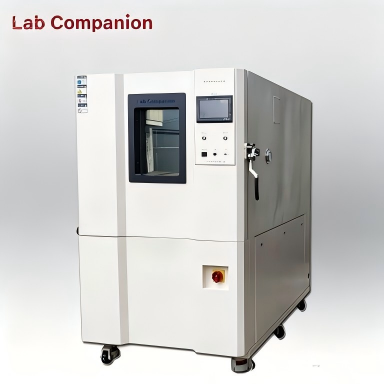
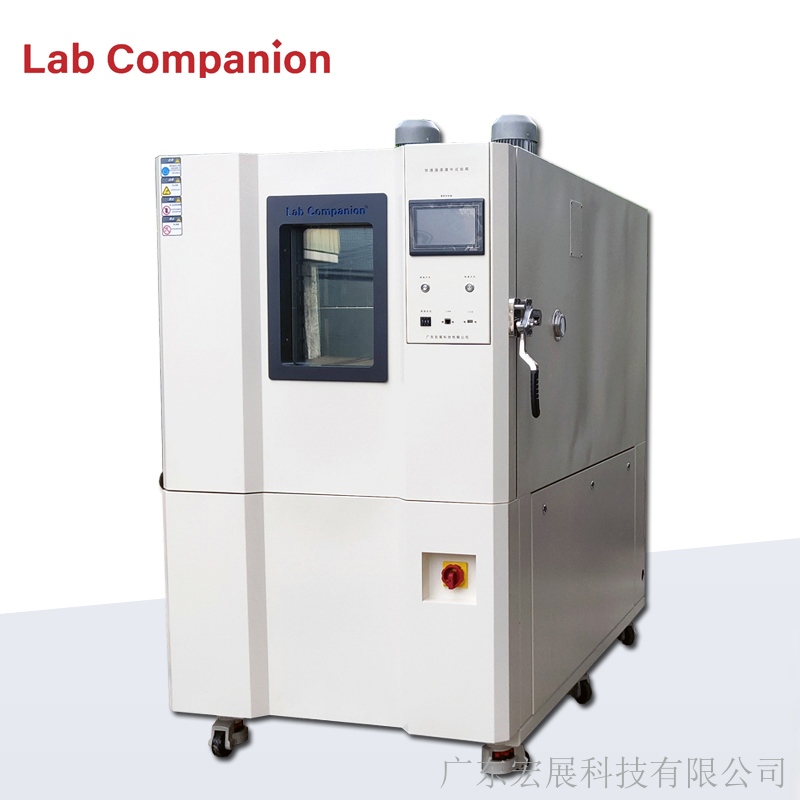
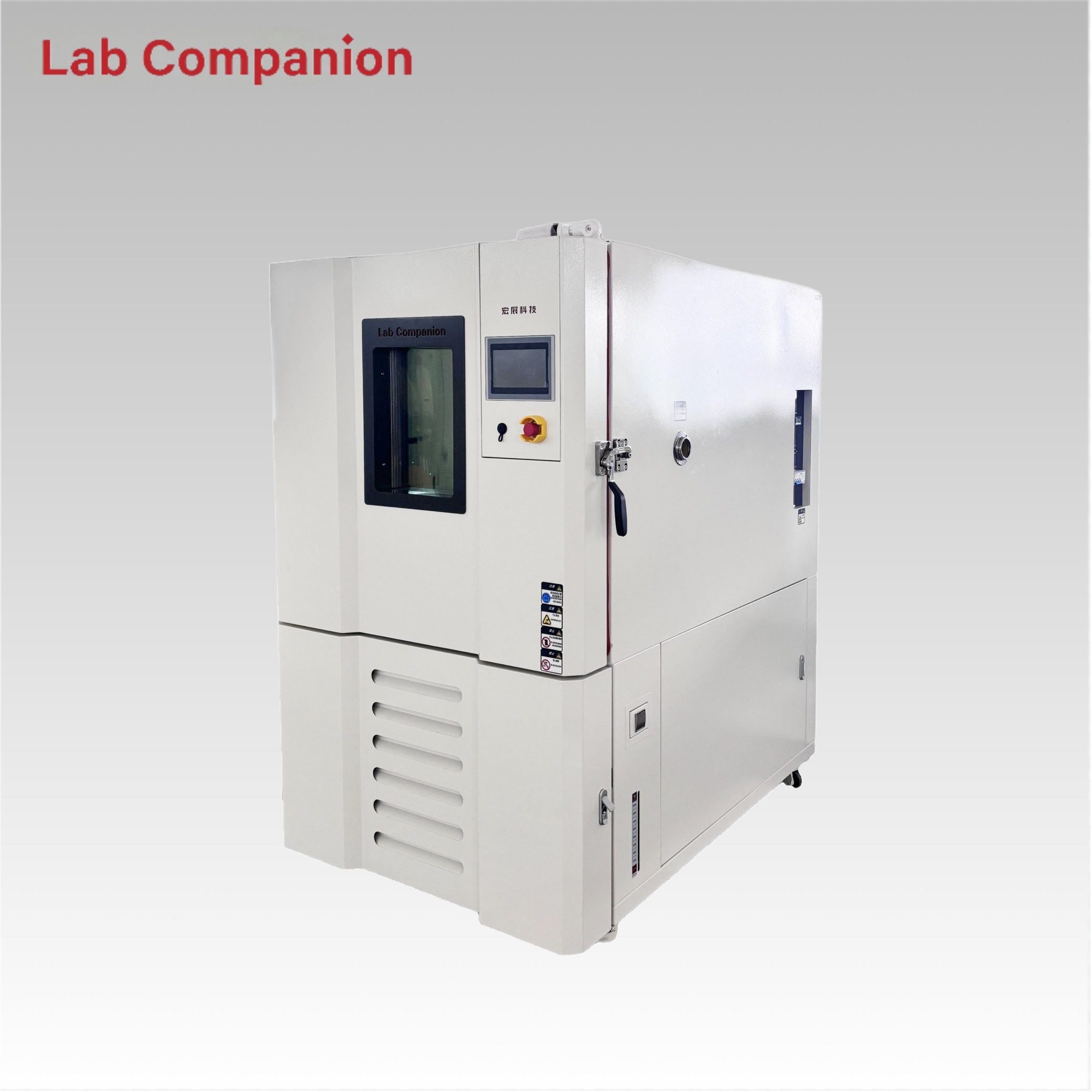
Temperaturkammer begehbarer Temperatur ist ein großes Labor, das den Betreiber zugibt, der in erster Linie für Umwelttests verwendet wird. Es wird üblicherweise zum Testen großer Teile, halbstelliger Produkte und fertigen Produkte verwendet , industrielle Kontrolle, Präzisionsmaschinen usw. Die begehbare Temperatur-Testkammer ist mit einem φ 50-mm-Testloch mit einem Stecker an der Seite der Box ausgestattet. Das Steckdosenmaterial ist ein geringes Schaum -Silikonkautschuk, das hohen und niedrigen Temperaturen standhalten und einen Isolierungseffekt aufweist. Die Heizung nimmt einen Porzellanrahmen -Nickelchromdraht -Elektroheizung an, der eine niedrige thermische Trägheit und eine lange Lebensdauer aufweist. Das Instrument gibt ein steuerbares PID-PID-Signal aus, das von einem Festkörperrelais gesteuert wird, um die Steuerung glatter und zuverlässiger zu gestalten.
Leistung und Eigenschaften der Temperatur-Temperatur-Testkammer:
1. Es verfügt über einen extrem großen Temperatur- und Feuchtigkeitskontrollbereich, der verschiedene Anforderungen für Benutzer erfüllen kann. Durch die Einführung einer einzigartigen Methode für ausgewogene Temperatur und Feuchtigkeit können eine sichere und präzise Temperatur- und Feuchtigkeitsumgebung erreicht werden. Es verfügt über eine stabile und ausgewogene Heizungs- und Befeuchtungsleistung und kann eine hohe Präzisionstemperatur und Feuchtigkeitskontrolle erzielen.
2. Mit intelligenten Temperaturregulatoren werden Temperatur und Luftfeuchtigkeit unter Verwendung von LED -Digitalanzeigen angezeigt. Die Feuchtigkeitstestkammer mit hoher und niedriger Temperatur kann optional mit einem Temperatur- und Feuchtigkeitsrekorder ausgestattet werden.
3. Die automatische Auswahl der Kühlkreislaufschaltung hat das automatische Steuergerät die Leistung automatisch ausgewählt und mit dem Kühlkreis gemäß dem festgelegten Temperaturwert, der direkten Start des Kühlgeräts und der direkten Kühlung unter hohen Temperaturbedingungen realisiert.
4. Die innere Tür ist mit einem großen Beobachtungsfenster ausgestattet, das die Beobachtung des experimentellen Status der Testproben erleichtert.
5. Ausgestattet mit fortschrittlichen Sicherheits- und Schutzgeräten - Reststromschalter, über Temperaturschutz, Phasenverlustschutz und Wasserabschnittschutzschutz.
Wir können Kunde mit hohen und niedrigen Temperatur -Testkammern, Niedertemtestkammern mit niedrigen Temperaturen, konstanten Temperatur- und Feuchtigkeitstestkammern, hohen und niedrigen Temperatur -Feuchtigkeits -Wärme -Testkammern, hohen und niedrigen Temperatur -Wechsel -Wärme -Testkammern und Salzspray -Korrosionstestkammern mit hoher und niedriger Temperatur. Die obigen Testkammern können nach Ihren Anforderungen angepasst werden.
Daher eignet sich eine begehbare Temperatur-Testkammer für Unternehmen mit hoher Nachfrage nach Umwelttests und Betriebsraum.
Wenn Sie an unseren Produkten interessiert sind und weitere Einzelheiten erfahren möchten, hinterlassen Sie bitte hier eine Nachricht. Wir werden Ihnen so schnell wie möglich antworten.






 Ein Angebot bekommen
 IPv6-Netzwerk unterstützt
